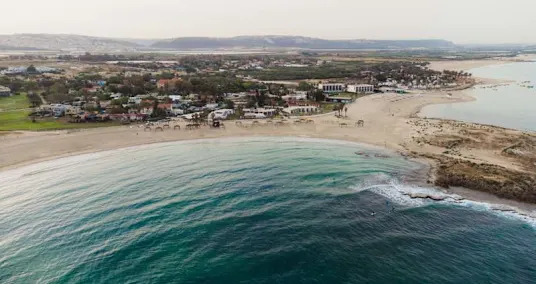
The discovery was made in an ancient shipwreck in the Dor Lagoon near the Carmel Coast, where archaeologists recovered nine pieces of unprocessed iron known as “blooms.”
Researchers from the University of Haifa said Wednesday that an underwater excavation off Israel’s northern Mediterranean coast uncovered what they described as the earliest known cargo of raw iron transported by ship, dating back around 2,600 years, Xinhua reported.
The discovery was made in an ancient shipwreck in the Dor Lagoon near the Carmel Coast, where archaeologists recovered nine pieces of unprocessed iron known as “blooms.” According to the university, the find provides direct evidence of how iron was transported in its earliest commercial stages.
The material was preserved in its original form, having solidified directly in a smelting furnace without undergoing forging or further refinement. Researchers said this distinguishes the cargo from later iron artifacts that typically show signs of shaping or tool-making.
Unlike copper and bronze, which could be melted into liquid form in ancient production processes, iron was heated with charcoal to produce a solid, porous mass. That mass was generally hammered to remove impurities and create denser material suitable for tools and implements.
The recovered blooms showed no indication of that secondary processing stage, suggesting they were transported immediately after production.

Earliest iron shipment discovered in ancient Mediterranean wreck
To determine the age and condition of the cargo, researchers conducted microscopic and chemical analyses.
Radiocarbon dating was also carried out on charred wood embedded in one of the pieces, helping confirm the timeline of the shipment. The findings were published in the journal Heritage Science.
Researchers said the cargo indicates that iron was being moved in raw form from production sites to other locations for further processing, pointing to a level of specialization in ancient manufacturing and trade networks in the Mediterranean.
The University of Haifa said the discovery provides new insight into early iron production and distribution practices in the region.
LATEST POSTS
- 1
 5 Cell phones of the Year
 - 2Where is Santa right now? NORAD tracks his 2025 Christmas Eve flight.
- 3Investigating Cooking and Culinary Expressions: An Excursion Through Flavors
- 4How is 'A Knight of the Seven Kingdoms' connected to 'Game of Thrones'?
- 5Venus shines at its best in spring and summer 2026 — here's what to look for



- Defense Minister Katz finally condemns Jewish extremist violence against Palestinians
- Favored Chinese Dish: Make Your Determination
- Inside the cockpit of RAF tanker during defensive mission against Iranian drones
- Watch interstellar comet 3I/ATLAS make its closest approach to Earth in free livestream on Dec. 18
- Nature: 10 High priority Setting up camp Spots In Europe
- 2026 will be the year NASA astronauts fly around the moon again — if all goes to plan
- From Specialist to Proficient Picture taker: Individual Triumphs
- Sophie Kinsella, 'Confessions of a Shopaholic' author, dies at 55 after battle with cancer
- Artemis II astronauts say they're "ready to go" for moon launch