By Akash Sriram and Joey Roulette
April 1 (Reuters) - NASA's Artemis II mission is shaping up to be more than just the next step in returning humans to the moon — it is a key test of whether the agency's traditional contractor-built systems can remain viable in a rapidly shifting space industry.
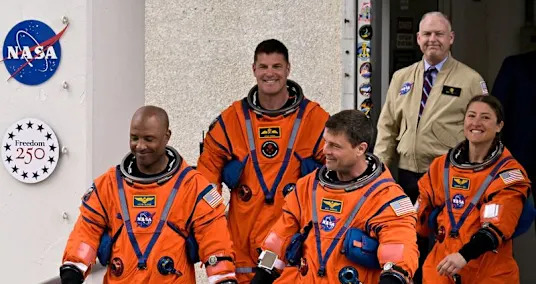
The mission, set to launch on Wednesday evening from the Kennedy Space Center in Florida, will send astronauts around the moon for the first time in over 50 years. It will be the first crewed flight of Boeing and Northrop Grumman's Space Launch System (SLS) rocket and Lockheed Martin's Orion capsule.
While both systems have undergone years of development and uncrewed testing, with the rocket's more than $24 billion development beginning in 2010, Artemis II marks the moment when their reliability will be judged under the highest possible stakes: human flight.
The outcome of Artemis II could reshape the political narrative around Orion as well as SLS, the world's most powerful active rocket, which has faced persistent criticism over delays, ballooning costs and a relatively slow launch rate.
"The stakes are extremely high whenever there are astronauts on board," said Michael Leshock, equity research analyst at KeyBanc Capital Markets, adding that Artemis II represents "a critical validation moment" as NASA evaluates proven commercial options.
COMMERCIAL RIVALS CHALLENGE SLS DOMINANCE
A new wave of private rockets inspired by SpaceX's reusable Falcon 9 has challenged NASA's thinking with the expendable SLS, a reincarnation of decades-old, Shuttle-era tech as the industry has focused on reusability in more recent years.
Commercial players like Elon Musk's SpaceX and Jeff Bezos' Blue Origin are already waiting in the wings. NASA chief Jared Isaacman announced last week that the agency intends to open the SLS mission - launching Artemis astronauts and cargo off Earth - to competitive bids from other companies for missions after Artemis V.
That was one of many changes Isaacman has made to the Artemis program in recent weeks. He also cancelled plans to upgrade SLS with a more powerful upper stage meant for later Artemis missions, instead tapping United Launch Alliance - the joint rocket venture of Boeing and Lockheed - to use its less powerful Centaur upper stage.
"If they (NASA) do include SpaceX or Blue Origin, it would give the U.S. more flexibility in who they partner with in the future, as SpaceX and Blue Origin are already part of Artemis; it's just how much larger a part they can play," said Andrew Chanin, CEO of ProcureAM, the issuer of the Procure Space exchange-traded fund.
LATEST POSTS
- 1
 New movies to watch this weekend: See 'The Drama' in theaters, rent 'Wuthering Heights,' stream 'Pizza Movie' on Hulu
 - 2Hundreds of Gazans evacuated from Strip for medical treatment - COGAT
- 3'Harry Potter' fans rejoice: HBO releases 1st trailer for new TV series, set to premiere this Christmas
- 4Image of foreigners being arrested in S.Africa during Eid is AI-generated
- 5Exclusive-Drugmakers raise US prices on 350 medicines despite pressure from Trump





- PA accuses Israel of 'human trafficking' after planeload of Gazans arrives in South Africa
- Are multiverses real? An astrophysicist explains why it depends on how you define ‘real’
- Exploring the Gig Economy: Examples from Consultants
- the Kinds of Thailand: Decision in favor of Your Number one Thai Dish!
- Find the Excellence of Old style Expressive dance: Encountering the Effortlessness and Polish of Dance
- From Certificate to Dollars: College Majors with Extraordinary Monetary Prizes
- UN mission says no evidence Hezbollah rearming in southern Lebanon
- L.A.'s most famous midcentury home, the Stahl House, is on the market for the 1st time, at $11K per square foot: See inside
- 'Israel has the right to continue its attacks,' Lebanese Foreign Minister announces